

Sleeping with your device
CPAP compliance: the truth about the 4-hour rule
The short answer
CPAP compliance is the usage rule your insurer checks to keep paying for your machine. For Medicare, that means at least 4 hours a night on 70% of nights during any 30 days in a row within your first 3 months. It confirms coverage, not whether you feel rested. Your prescribing clinician sets your personal target.

The essentials
Key takeaways
The core of this article, in a few lines.
- CPAP compliance is an insurance coverage check. For Medicare, it means at least 4 hours a night on 70% of nights in a 30-day stretch.
- The compliance rule is not a health target. Your prescribing clinician sets your personal target.
- The early-morning hours on the mask matter, because breathing pauses during REM sleep tend to be longer.
- A steady wake time and getting back to sleep with the mask on can add real hours of use.
What CPAP compliance actually means
CPAP compliance is the usage rule your insurer checks to keep paying for your machine. For Medicare, that means at least 4 hours a night on 70% of nights during any 30 days in a row within your first 3 months. It confirms coverage, not whether you feel rested. Your prescribing clinician sets your personal target.
The Medicare rule comes from its coverage requirements for PAP devices (Centers for Medicare & Medicaid Services [CMS], 2016). Private insurers set their own rules, so check with yours. Either way, the rule is not a personal goal.
The green check that doesn't match how you feel
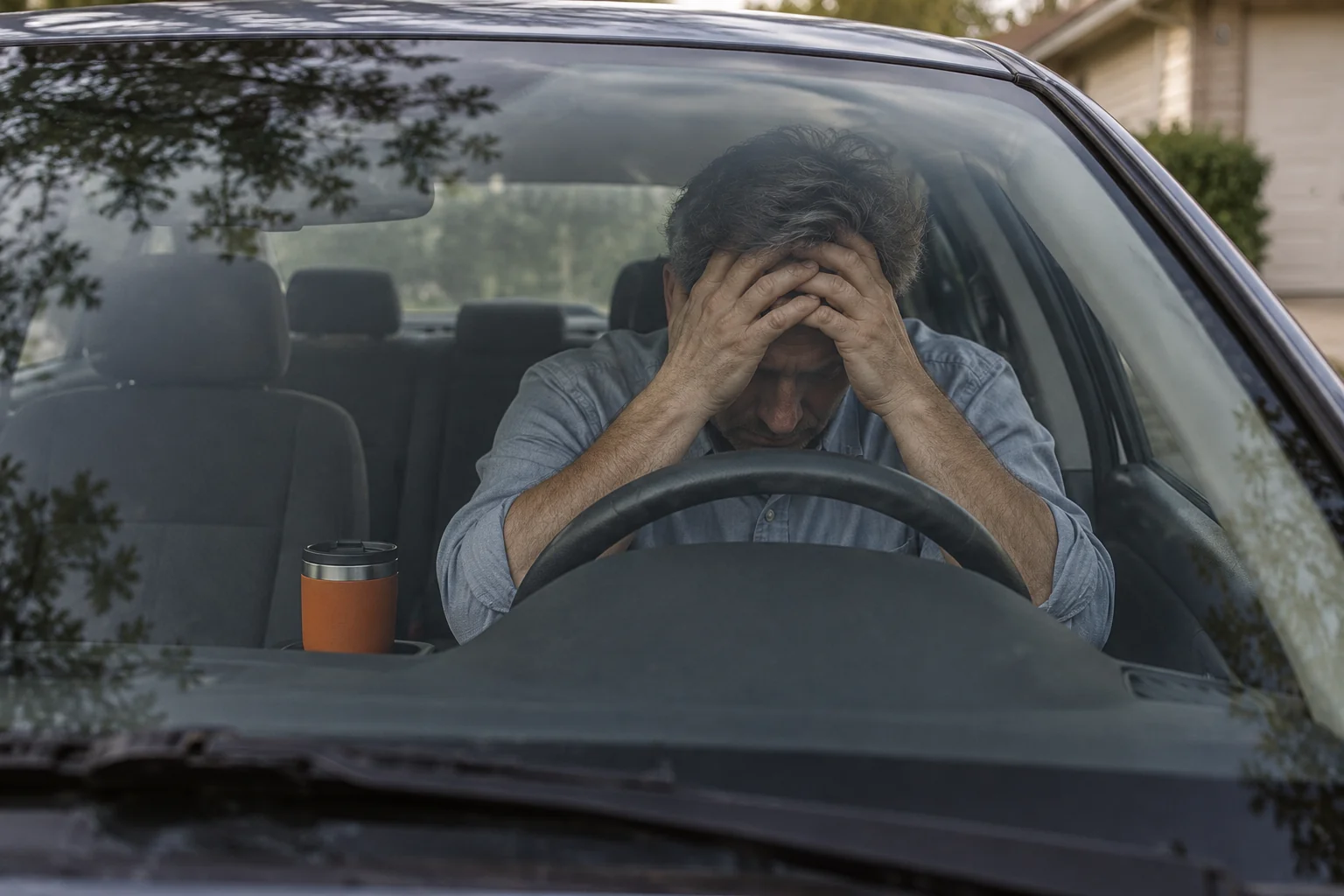
It is 5:40 in the morning and the app is already open. The screen says 4.5 hours, the check mark is green, and the night counted. Then you see the detail: the mask came off at 2:50 and stayed on the nightstand until the alarm. By mid-afternoon you are reaching for a second coffee and wondering what the green check was for.
You did what was asked and hit the number. The rule matters, because keeping your coverage keeps the machine in your bedroom. But CPAP compliance answers a billing question: is this person using the device enough for us to keep paying? Whether you wake up clear-headed is a different question.
If the tiredness feels bigger than the hours, our guide to why you're still tired on CPAP walks through what to check with your clinician first.
Why CPAP compliance is a floor, not a finish line
A common belief is that once you are compliant, the job is done. The research says otherwise. In a study of 149 adults with severe sleep apnea, researchers looked at how many hours of nightly CPAP use lined up with normal results on three measures after three months (Weaver et al., 2007). Self-rated sleepiness reached normal at about 4 hours a night. Objective alertness, measured by how quickly someone falls asleep in a quiet room during the day, reached normal at about 6 hours. Daily functioning, like focus at work and energy for your evening, took about 7.5 hours.
The insurance rule sits roughly where the first measure reached normal. It is not where people functioned at their best. In the same study, more nightly use was linked with better results on sleepiness, and with better daily functioning up to about 7 hours.
So the 4-hour line is not a target and not a sign you are getting enough. How many hours you need is a conversation for your prescribing clinician.
Why the early-morning hours matter most
CPAP keeps your airway open with gentle air pressure, and it only works while the mask is on. When the mask comes off, the breathing pauses it was preventing can come back, even if you don't notice them.
Timing makes this more important. REM sleep (the dreaming stage of sleep) is more common in the later hours of the night, and breathing events during REM are usually longer and cause bigger drops in oxygen. A review in the European Respiratory Review puts it plainly: if CPAP is used only in the first half of the night, most REM sleep is left untreated (Bonsignore et al., 2024).
That is why the 2:50am mask-off night is more than a small shortfall. The hours lost after 3am are often the ones you most need covered.
If you find yourself awake at the same hour most nights, it helps to understand why you keep waking up at 2am.
Hours on the mask are mostly a sleep question
How many hours you log depends on two things that have little to do with the machine.
The first is the length of your sleep window. If you get into bed at 12:30 and your alarm goes off at 5:30, the most you can log is five hours. No setting can stretch that window.
The second is whether you drift back to sleep with the mask on after you wake, or lie there alert until it comes off.
This second skill can be learned. In a randomized trial of 145 adults with both sleep apnea and insomnia (long-running trouble falling or staying asleep), four sessions of CBT-I before starting CPAP added an average of 61 minutes of nightly CPAP use compared with usual care (Sweetman et al., 2019). CBT-I stands for cognitive behavioral therapy for insomnia, a structured, drug-free way to retrain sleep habits. More people in that group also accepted CPAP at the start: 99% compared with 89%.
If that pairing sounds familiar, read more about having insomnia and sleep apnea at the same time.
At Clementine, the Clementine Protocol we build with clients focuses on these two levers: steady circadian timing (your body's roughly 24-hour internal clock) and consistent habits that make it easier to fall back asleep. Coaching never treats sleep apnea or changes your device. Your device opens your airway. Coaching teaches you to sleep.
Habits that add good hours on the mask
- 01
Keep a steady wake time.
The same time every morning, weekends included, anchors your body clock and builds sleep pressure (the drive to sleep that grows the longer you are awake).
- 02
Protect a sleep window that fits your target.
Work back from your wake time so the gap between lights out and your alarm leaves room for the hours your clinician wants.
- 03
Plan the early-morning wake-up in daylight.
Decide ahead of time what you will do at 3am: leave the mask on, breathe slowly, and let yourself drift.
- 04
Give yourself a calm last hour.
Dim the lights and put work away so your mind can slow down.
- 05
Note what wakes you.
If the mask leaks, the air feels too strong, or your mouth dries out, write it down for your clinician or equipment supplier. They can check fit and settings safely.
Reading your CPAP app without nightly math
CPAP compliance is scored night by night, but one night tells you very little. Look at two to four weeks, and notice what time the mask usually comes off and whether the pattern shifts on weekends or after late evenings.
Most apps also show mask leak and AHI (the apnea-hypopnea index, a count of breathing pauses per hour). Bring that trend to your clinician.
Wearables like Oura, WHOOP or an Apple Watch can estimate when you fall asleep and wake up. They cannot confirm your breathing is under control. If you track sleep on more than one device, here is what to do with your sleep tracker data so it leads to one change, not more worry.
The uncomfortable habit: getting up on time after a short night
After a rough night, the instinct is to sleep in. The uncomfortable, effective move is to get up at your usual time anyway.
Sleeping in shifts your body clock later, which can make the next night harder. Holding your wake time keeps it on track. One caveat: if you feel very sleepy, do not drive drowsy, and tell your clinician.
What not to do with your compliance numbers
- 01
Don't treat the green check as the finish line.
It shows coverage, not how rested you are.
- 02
Don't take the mask off once you've logged the hours.
The late hours protect the most.
- 03
Don't adjust the pressure, settings or mask on your own.
Talk to your clinician or equipment supplier about any change.
- 04
Don't lie awake in bed for hours to chase a bigger number.
Long stretches awake in bed can teach your body that bed is a place to be alert.
- 05
Don't give up on the device because you still feel tired.
Take persistent tiredness to your prescribing clinician first: mask fit, pressure and other sleep problems are theirs to check.
Why no single number fits everyone
The hour figures above come mainly from one study of people with severe sleep apnea, and they describe averages, not you. Some people need more, some less. The 4-hour CPAP compliance rule itself is a coverage policy, so your personal target comes from your prescribing clinician, not the app.
A simple checklist for the next month
- 01
Know the rule.
CPAP compliance keeps your coverage. It is not your health target.
- 02
Ask your clinician.
Find out how many hours they want you to aim for.
- 03
Hold your wake time.
Same time every day, even after a short night.
- 04
Report problems.
Leaks, discomfort or dryness go to your clinician or supplier.
More good nights, not perfect ones
You don't need perfect nights, just more good ones. Most people get there by protecting the sleep around the device, one steady habit at a time, while their clinician looks after the device itself.
Frequently asked questions
What is CPAP compliance?
How many hours a night should I use CPAP?
What happens if I don't meet CPAP compliance?
Is some CPAP use better than none?
Sources & clinical context
- 1.Bonsignore, M. R., Mazzuca, E., Baiamonte, P., Bouckaert, B., Verbeke, W., & Pevernagie, D. A. (2024). REM sleep obstructive sleep apnoea. European Respiratory Review, 33(171), 230166.
- 2.Centers for Medicare & Medicaid Services. (2016). Positive airway pressure (PAP) devices: Complying with documentation & coverage requirements (ICN 905064).
- 3.Sweetman, A., Lack, L., Catcheside, P. G., Antic, N. A., Smith, S., Chai-Coetzer, C. L., Douglas, J., O'Grady, A., Dunn, N., Robinson, J., Paul, D., Williamson, P., & McEvoy, R. D. (2019). Cognitive and behavioral therapy for insomnia increases the use of continuous positive airway pressure therapy in obstructive sleep apnea participants with comorbid insomnia: A randomized clinical trial. Sleep, 42(12), zsz178.
- 4.Weaver, T. E., Maislin, G., Dinges, D. F., Bloxham, T., George, C. F. P., Greenberg, H., Kader, G., Mahowald, M., Younger, J., & Pack, A. I. (2007). Relationship between hours of CPAP use and achieving normal levels of sleepiness and daily functioning. Sleep, 30(6), 711–719.
Ready to build better sleep, for good?
Begin tonight