

Sleeping with your device
Still tired on CPAP? You're not failing
If you're still tired with CPAP, first ask your doctor to check mask fit, pressure, and how many hours you wear it each night. If those look right, the tiredness often comes from sleep habits years of broken nights left behind. Your device opens your airway. Coaching teaches you to sleep.
The same is true for a dentist-fitted mouth guard. Your physician and dentist manage your breathing care, and coaching never treats sleep apnea. Please keep using your device as prescribed while you work on the rest.
Guides
Help for feeling rested with your device
Practical answers on getting used to CPAP or a mouth guard, and why rest can lag behind.
First weeks on CPAP
CPAP side effects: which ones actually fade
Sort what eases on its own, what your care team can solve, and what needs its own kind of help.
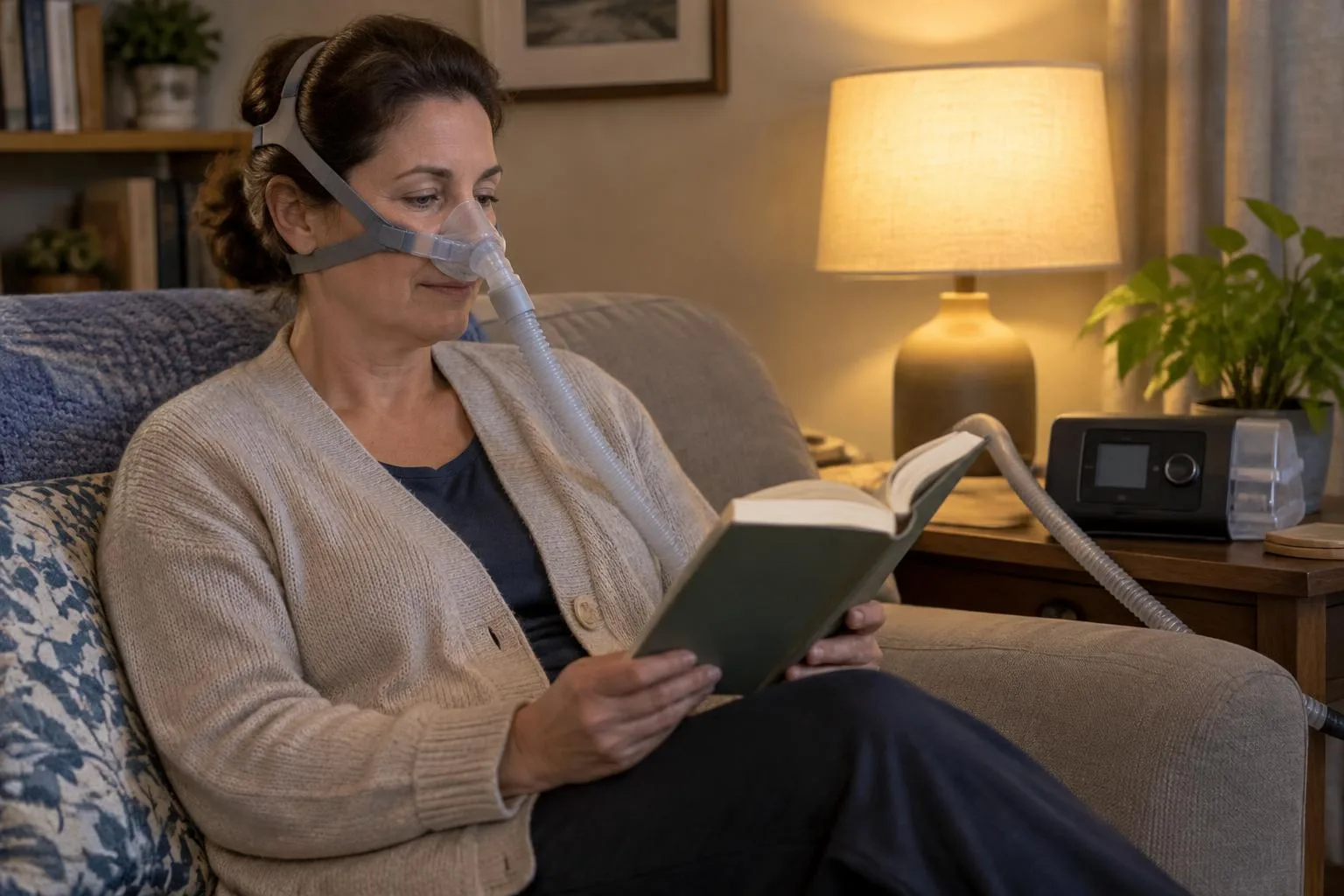
First weeks on CPAP
Getting used to CPAP: why month one matters
The first weeks with a mask are hard for most people, and a few calm habits help each night get easier.

Sleeping with your device
Getting used to a sleep apnea mouth guard
Early soreness is common and often eases, and a steady nightly routine helps your device become second nature.

Sleeping with your device
CPAP compliance: the truth about the 4-hour rule
The green check in your app tracks your coverage, and feeling rested is a separate question worth asking.
Questions
Common questions
What people ask when the device works but the tiredness stays.
Why am I still tired with CPAP?
How long does it take to feel better on CPAP?
Should I stop using CPAP if I'm still tired?
Can trouble sleeping make CPAP harder to stick with?
Start resting with your device, tonight
Keep wearing your device as prescribed, and begin retraining the sleep habits around it.
Begin tonight